
Key Takeaways
- Preparation can reduce confusion, delays, and avoidable conflict once a divorce begins.
- Gathering financial, property, and parenting records early may protect access to important information.
- Texas filing rules, local court practices, and safety needs should be addressed before submitting paperwork.
- Organization is appropriate. Hiding assets, draining accounts, or creating unexplained debt is not.
- Simple cases may be manageable with self-help resources, but complicated cases often need tailored legal advice.
Preparing for a Texas divorce is not only about completing documents. It is about creating a clear picture of the family’s finances, property, debts, children’s routines, housing needs, and immediate concerns before the case starts. If you are still deciding how to begin, you can find out what divorce forms you need in Texas while building a practical plan for the information behind those forms.
Good preparation is not an effort to gain an unfair advantage. It is a way to preserve records, avoid relying on memory, and make informed decisions during a stressful time. The goal is to stay calm, document facts, and recognize when professional guidance may be important.
Why Preparation Matters Before Filing
Once a case is filed, deadlines, court notices, and communication with the other spouse can quickly demand attention. A person who waits to download bank statements may discover that older records are no longer easy to obtain. Someone who has not listed monthly bills may struggle to explain what temporary financial arrangements are needed.
Preparation also helps separate urgent issues from ordinary tasks. For example, a family with stable finances and no children may focus first on records and filing logistics. A family facing threats, stalking, domestic violence, or coercive control needs a safety plan before discussing paperwork or giving notice of a planned filing.
Step 1: Confirm Where and When a Case Can Begin
Texas requires that one spouse have lived in the state for at least 6 months and in the county where the divorce is filed for at least 90 days. Local courts may have their own rules, procedures, and document requirements. Review the county clerk’s info and the Texas divorce basics guide before filing to understand common questions about filing, property, and timing. The process usually involves a 60-day waiting period after filing, but disputes over children, property, support, or incomplete documents can extend this timeline.
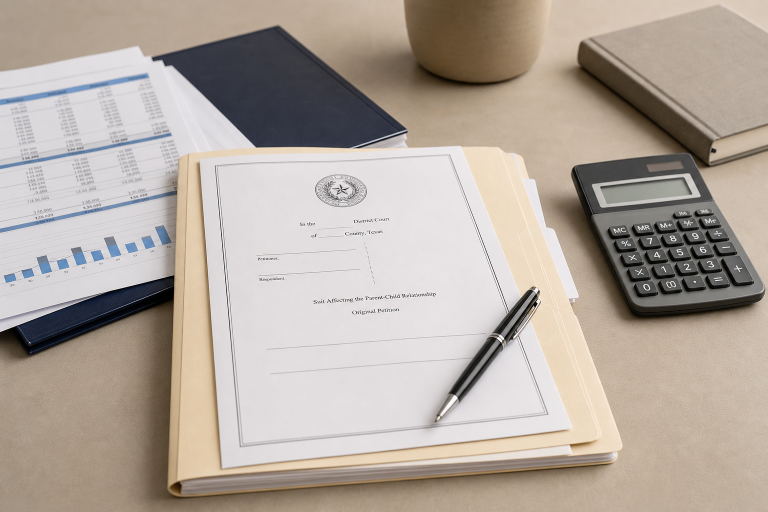
Step 2: Build a Complete Financial File
Create a secure folder, either physical or digital, and collect copies of records before access becomes difficult. Include:
- Recent bank, credit union, credit card, retirement, and investment statements.
- Pay stubs, employment benefits information, and the last several tax returns.
- Mortgage, lease, vehicle loan, student loan, medical debt, and personal loan documents.
- Insurance policies, beneficiary designations, and records of recurring household expenses.
- Business records if either spouse owns, manages, or has an interest in a company.
- Documents related to inheritances, gifts, or property owned before marriage.
A simple spreadsheet can make this material easier to review. List each account or debt, the last four digits, approximate balance, account holder, and date of the latest statement. Mark gaps rather than guessing at missing information.
Step 3: Organize Records Without Creating Financial Problems
Keeping copies of records is different from concealing assets. Avoid emptying joint accounts, transferring property, selling valuables, canceling insurance, or opening new debt without understanding the possible consequences. Keep a factual record of substantial withdrawals, transfers, and purchases.
When it is safe to do so, update passwords for personal email, cloud storage, health portals, and financial accounts. Turn on multi-factor authentication, review shared devices and location settings, and save needed records before changing access. Do not delete shared documents or communications that may matter later.
Step 4: Inventory Property and Debt
Make a list of everything the household owns and owes. Titles and account names do not always tell the whole story, so note the timing and source of funds when known.
- List real estate, estimated value, and current mortgage balances.
- List vehicles, recreational equipment, jewelry, collectibles, and valuable personal property.
- Identify retirement accounts, investments, stock options, and digital assets.
- List every debt, including credit cards, tax obligations, medical bills, and personal loans.
- Mark each entry as known, estimated, disputed, or needing a professional valuation.
Step 5: Create a Parenting Information File
If children are involved, focus on stability and practical details. Gather school and daycare information, medical contacts, activity schedules, medications, and records of regular routines. Keep track of transportation, appointments, homework, meals, and other day-to-day parenting responsibilities.
Keep Notes Useful and Child-Focused
Notes should be factual, dated, and calm. Avoid insults, speculation, or messages written in anger. A temporary schedule can address school nights, weekends, holidays, exchanges, transportation, and parent-to-parent communication. The purpose is to identify what helps children maintain consistency, not to create a personal attack file.
Step 6: Review Housing, Income, and Expenses
Build a realistic monthly budget that includes housing, utilities, food, transportation, insurance, childcare, medical costs, and debt payments. Identify which bills are paid from joint accounts and which are paid individually. Gather leases, mortgage information, utility bills, proof of income, and evidence of regular expenses.
This exercise can reveal practical concerns early. For example, if one spouse moves out and a joint account is no longer available for rent or groceries, the family may need a temporary plan for bill payments while the case is pending.
Step 7: Put Safety Before Ordinary Divorce Planning
Threats, violence, stalking, substance abuse, and coercive control require a different approach. Consider a private emergency plan that includes trusted contacts, safe housing, transportation, medication, cash if appropriate, and copies of key records. If there is immediate danger, contact emergency services. A domestic violence advocate or qualified attorney may help a person plan more safely before the other spouse learns about a filing.
Step 8: Learn the Court Process and Choose the Right Help
Many Texas courts use electronic filing, but local procedures matter. Check if self-represented parties can e-file, and rules for signatures, fees, service, document names, and hearings. The Texas Judicial Branch offers resources for litigants, including forms and court help. Resources suit cooperative cases with limited property and disputes. Document review finds missing info. Mediation can help spouses negotiate safely. Full representation is vital with children, real estate, retirement, businesses, hidden assets, debt, or safety risks.
Common Mistakes to Avoid Before Filing
- Signing an agreement without reading every provision.
- Assuming an uncontested case will remain uncontested.
- Ignoring retirement accounts, insurance, business interests, or tax issues.
- Posting private disputes or financial details on social media.
- Relying on verbal promises rather than written terms.
- Waiting until a hearing is scheduled to gather basic records.
A Simple Seven-Day Preparation Plan
- Day 1: Create a secure folder and list immediate questions.
- Day 2: Download financial, tax, employment, and insurance records.
- Day 3: Inventory property, debts, bills, and account access.
- Day 4: Gather school, medical, childcare, and parenting information.
- Day 5: Review housing, income, transportation, and safety needs.
- Day 6: Check county filing rules and court technology.
- Day 7: Identify questions that need legal or financial advice.
Conclusion
Preparing for a Texas divorce in 2026 starts with organization, not panic. A complete financial file, a realistic budget, careful parenting information, secure records, and awareness of court procedures can make the next steps more manageable. Use this checklist as a starting point, then seek guidance suited to the specific facts and risks of your case.